Canva’s announcement of Craft is notable less for a new name in the image-generation field than for the choice it puts in front of prospective users: explore the model inside Canva’s Dream Lab, or access it through a public API. Those are the two documented routes. The announcement does not provide enough detail to rank Craft against other image generators, or to say which route will produce better images. The practical question is narrower: which way of accessing this particular model best fits what you want to do?
Canva announced Craft on October 22, 2026, calling it the company’s first image-generation model. It says Craft is available in Dream Lab and through a public API. TechCrunch also reported the release and the model’s two-stage approach. The distinction matters: Canva’s description of how the model works and what it can do is a company claim, not an independent performance finding. (Canva; TechCrunch)
The documented choice
| Route | What the evidence establishes | Likely fit, based on the route | What remains unknown |
|---|---|---|---|
| Dream Lab | Craft is available inside Canva’s Dream Lab. | Someone who wants to try the model through that named Canva product. | The announcement does not establish the exact workflow, available controls, or whether it suits any particular design task. |
| Public API | Canva makes Craft available through a public API. | Someone considering access through an API rather than Dream Lab. | The evidence provided does not specify setup, pricing, limits, integrations, or technical requirements. |
The “likely fit” column is a practical interpretation of the two access routes, not a claim about features Canva has documented. In particular, availability through an API does not tell us what a developer can configure, how the API is priced, or how easily it connects to a given product. Those details could matter more to a decision than the model’s stated design focus, but they are not established in the available reporting.
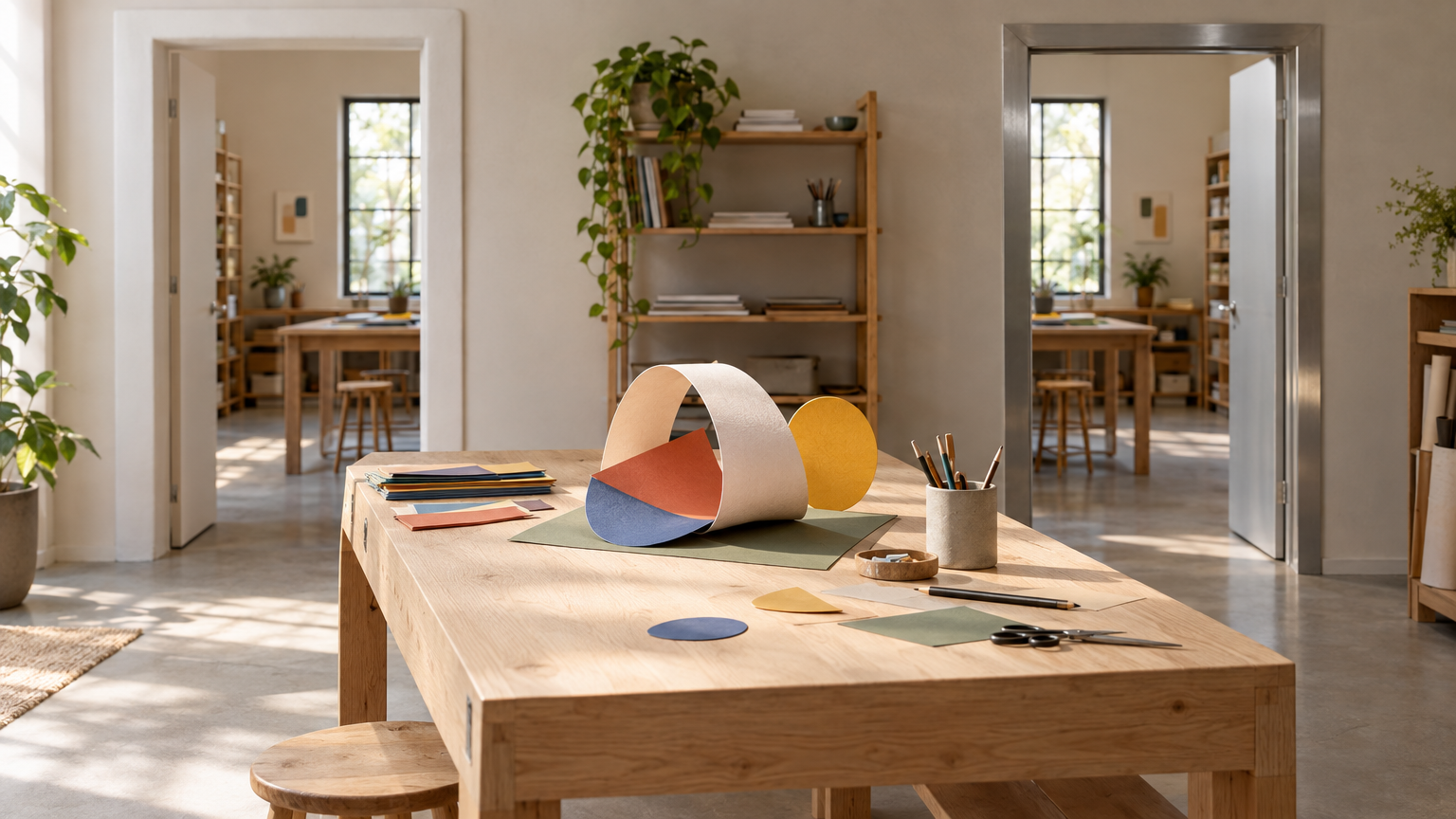
Think of the two routes as two entrances to the same workshop. Dream Lab is the entrance named as part of Canva’s product; the public API is another way in. The doors suggest different starting points, but they do not, by themselves, tell you what tools are inside or what work you can finish there. Canva’s description gives a further clue about the model’s intended approach: it says Craft plans image composition before rendering. That is a description of the process, not proof that the result will be more useful, accurate, or attractive. (Canva; TechCrunch)
What Canva says Craft is for
Canva presents Craft as a model focused on design layouts and says it plans composition before rendering. That emphasis gives the announcement a specific design angle: the company is positioning Craft around how elements are arranged, rather than describing it only as a general image generator. But the evidence here does not show examples that would let readers assess the quality of those layouts, or compare them with outputs from another model.
Canva’s claims about layout and text should therefore be treated as claims about intended capabilities, not settled results. The available reporting confirms the release and describes a two-stage approach, but it does not independently verify that Craft reliably places elements well or renders text better than alternatives. No benchmark, evaluation, or user study is included in the evidence for this article. The absence of such evidence does not mean Craft performs poorly; it means a confident performance comparison would go beyond what is known here.
Illustrative example: A designer considering an image for a campaign might care about whether the composition leaves room for a headline. That is a reasonable question to ask of a model marketed around layout. It is not evidence that Craft will reserve that space consistently, render the headline correctly, or outperform another tool. Those would need to be checked against actual outputs and relevant alternatives.
That distinction is useful for both kinds of prospective user. Someone approaching Craft through Dream Lab can treat the product as a place to explore the model, without assuming the marketing description guarantees a particular result. Someone considering the API can regard layout-focused image generation as the stated direction, while withholding judgment about whether it is suitable for a specific application until technical and performance details are available.
Which route should you choose?
If you already want to try Craft within Canva, Dream Lab is the clearest documented starting point: Canva explicitly says the model is available there. The evidence does not establish what features Dream Lab exposes, so it would be premature to promise a particular workflow or level of control. The sensible reason to choose this route is simply that it is the named Canva environment for access, not a verified claim that it is easier or more capable.
The public API is the documented alternative for people who want API access. That may be relevant to a developer or organization exploring how a model could be incorporated into a product or process, but the brief does not provide the API’s specifications or terms. Before making plans around it, a prospective user would need information such as access requirements, supported inputs and outputs, pricing, limits, and permitted uses. These are questions to resolve, not facts supplied by the announcement.
For a person who only wants to generate images, the API may be more than they need; for a team considering integration, Dream Lab may not answer the relevant technical questions. Those are conditional judgments about the broad difference between an in-product route and an API route. The evidence does not document specific user groups, product features, or intended use cases beyond Craft’s stated design-layout focus.
The announcement also mentions Craftfast and Craft-ultrafast as models still in development. They should not be treated as available alternatives in a present-day choice: the evidence says they remain in development, not that users can access them now. (Canva)
A careful first look
For now, the strongest conclusion is modest. Canva has released its first image-generation model, and it offers two documented access routes: Dream Lab and a public API. The company describes Craft as planning composition before rendering and focusing on design layouts, but those capability claims have not been independently established by the evidence here. A useful comparison with other models would require comparable outputs and a defined task; a useful decision between the two routes would require more detail about each one.
So the choice is not yet “which version makes the better image?” The evidence describes one model and two ways to reach it, not two versions with documented differences. Choose Dream Lab if you want the named Canva product route; investigate the public API if API access is what your work calls for. For either, treat the design promise as a proposition to evaluate—not a result the announcement has already proved.
Sources
- Introducing Canva Craft (2026-10-22)
- Canva releases its first image generation model (2026-10-22)