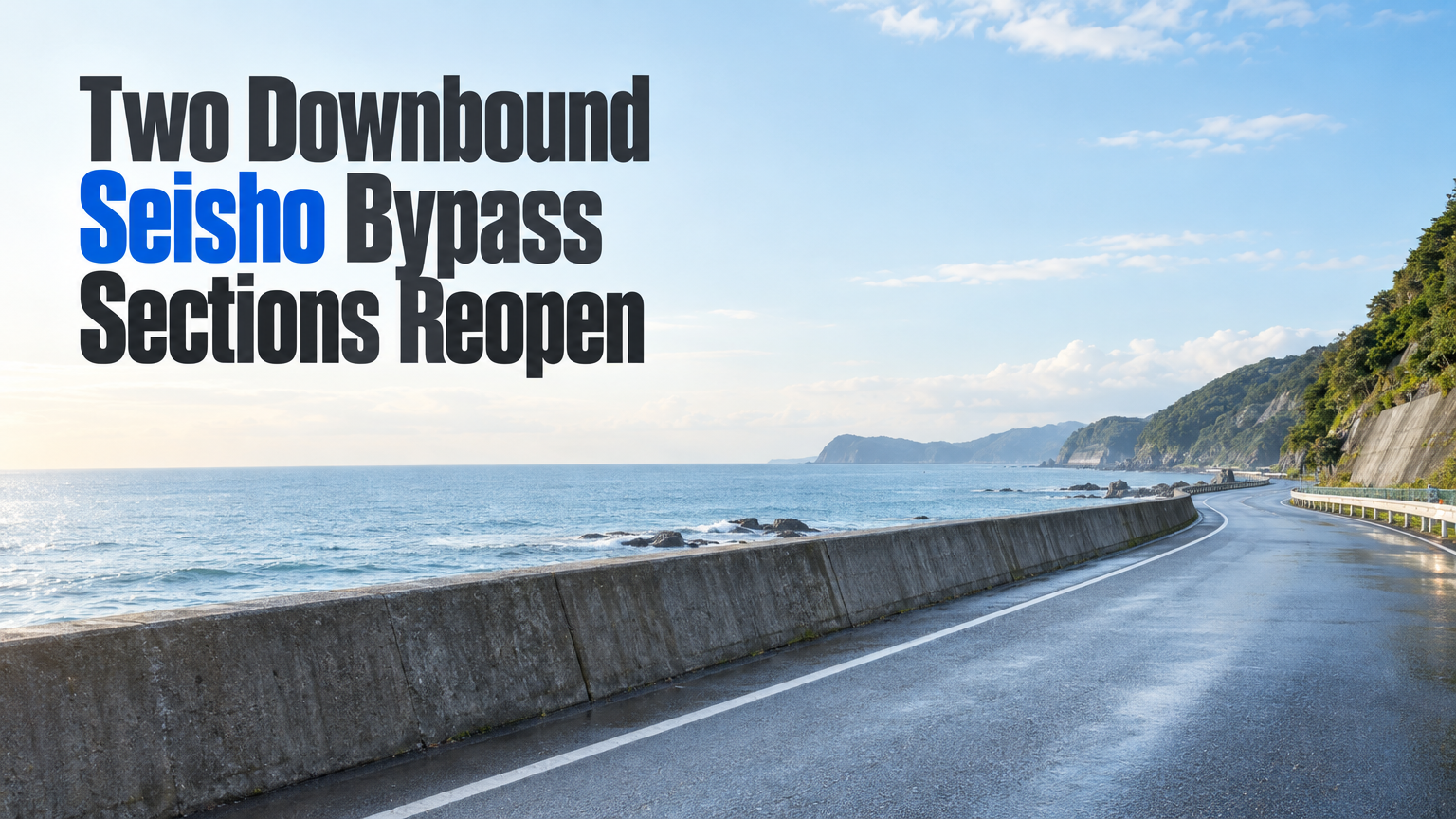
Drivers using the downbound Seisho Bypass in Kanagawa have a section-by-section update: the free stretch between Oiso-higashi IC and Seisho-Ninomiya IC reopened at 1 a.m. on Nov. 2, after a closure linked to high waves. The paid stretch farther west, between Seisho-Ninomiya IC and Hayakawa IC, had reopened the previous evening. The notices cover those named downbound sections; they do not establish that the entire bypass or other nearby roads are clear.
The Yokohama National Highway Office, part of the Kanto Regional Development Bureau, said the free section reopened after it confirmed vehicle traffic was safe. The office attributed the closure to high waves associated with Typhoon No. 31. Its report identifies the reopened section as the E84 Seisho Bypass from Oiso-higashi IC to Seisho-Ninomiya IC.
Two sections, two reopening times
The updates are best read as separate reports about two stretches of the same downbound route. Their boundaries and reopening times matter: the sections meet at Seisho-Ninomiya IC, but they did not reopen at the same time.
The Nov. 1 update from the highway office and NEXCO Central Japan says the paid section between Seisho-Ninomiya IC and Hayakawa IC reopened at 10 p.m. The Nov. 2 final report gives the later reopening time—1 a.m.—for the free section between Oiso-higashi IC and Seisho-Ninomiya IC.
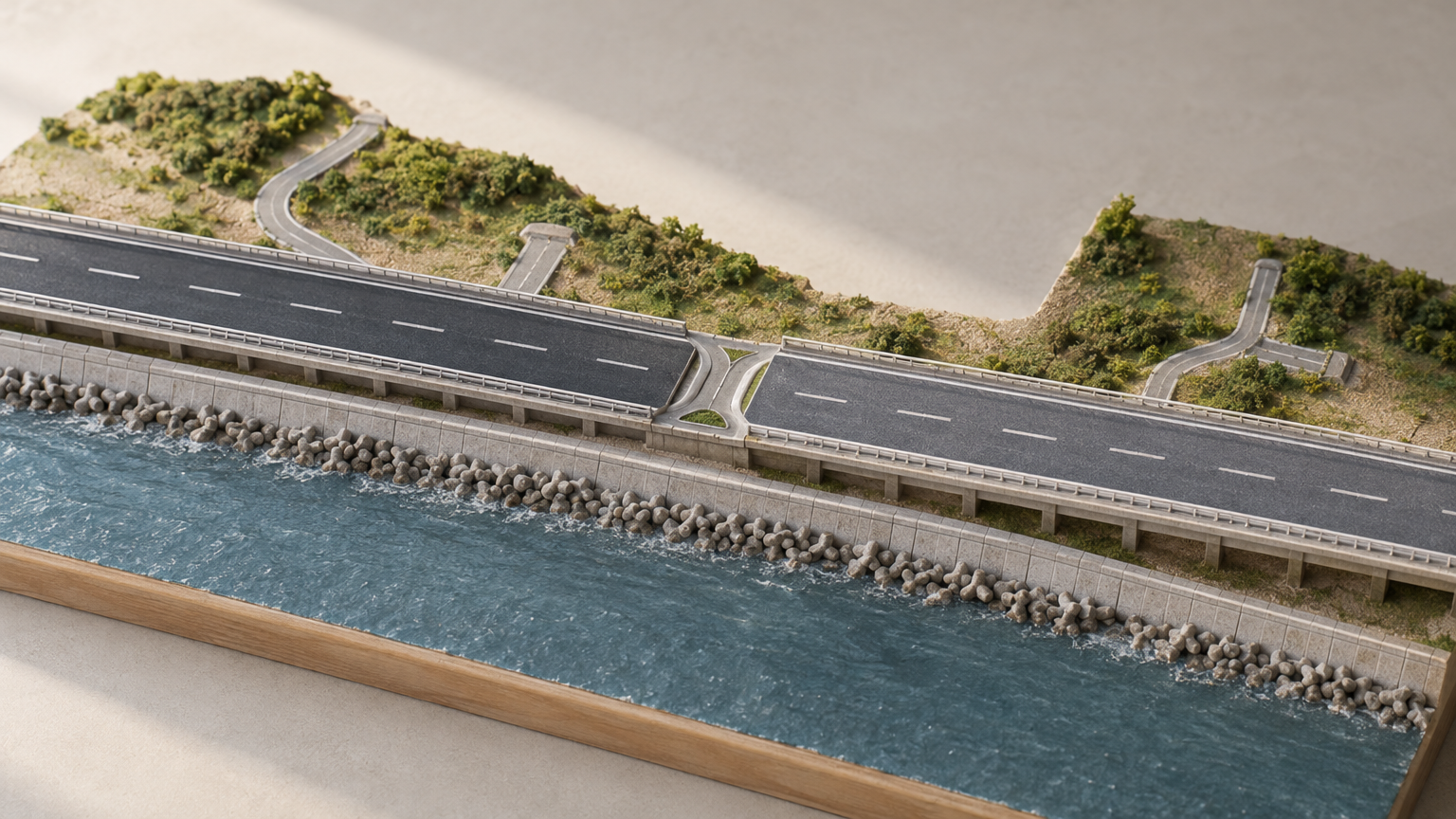
Together, the notices document the reopening of both specified downbound sections in sequence: first the paid stretch, then the free stretch. They do not describe a simultaneous reopening, and they do not provide a general status report for the wider road network. In particular, knowing that these segments reopened does not tell a driver whether another road, a connecting route, or traffic in the opposite direction is available.
What the notices establish
For the free section, the highway office links the closure to high waves associated with Typhoon No. 31 and says the road reopened after confirmation that vehicle traffic was safe. That explains the stated reason for the closure and the basis given for reopening this segment. It is not a prediction about later conditions or a statement about the storm’s effects elsewhere.
The information is specific in three ways: it names the downbound direction, identifies the interchanges at each end, and gives a reopening time for each section. Those details help distinguish the two reports from a broad claim that “the Seisho Bypass is open.” The evidence supports saying that the named downbound stretches reopened at the times reported. It does not support extending that conclusion to every part of the bypass or to nearby roads.
This distinction is useful when a route includes more than one segment. A traveler checking the stretch from Oiso-higashi to Seisho-Ninomiya should refer to the Nov. 2 notice. Someone checking the paid stretch from Seisho-Ninomiya to Hayakawa should refer to the Nov. 1 update. Matching the endpoints avoids confusing one reopening time with the other.
The same care applies to the word “safe.” The office says it confirmed vehicle traffic was safe before reopening the free section. That is the authority’s stated decision at the time of the notice, not a guarantee about conditions later or on roads beyond that section. The notices also do not report the status of upbound traffic. They therefore cannot answer questions about a journey that depends on the opposite direction or on other roads.
Using the updates for a route check
Start with the part of the trip that uses the bypass. If it is the downbound free section between Oiso-higashi IC and Seisho-Ninomiya IC, the reported reopening time is 1 a.m. on Nov. 2. If it is the downbound paid section between Seisho-Ninomiya IC and Hayakawa IC, the reported reopening time is 10 p.m. on Nov. 1. These are distinct pieces of route information, not interchangeable timestamps.
Then consider whether the trip relies on anything outside those named sections. The two reports do not establish the status of other roads, connections, or directions. A reopening notice for the specified stretch is useful evidence about that stretch; it cannot, on its own, settle the condition of an entire journey.
The practical takeaway is narrow but clear: following the high-wave closure, officials reported that the two named downbound Seisho Bypass sections reopened at different times. Keeping the free and paid sections—and their endpoints—separate makes the update easier to use without reading more into it than the notices say.