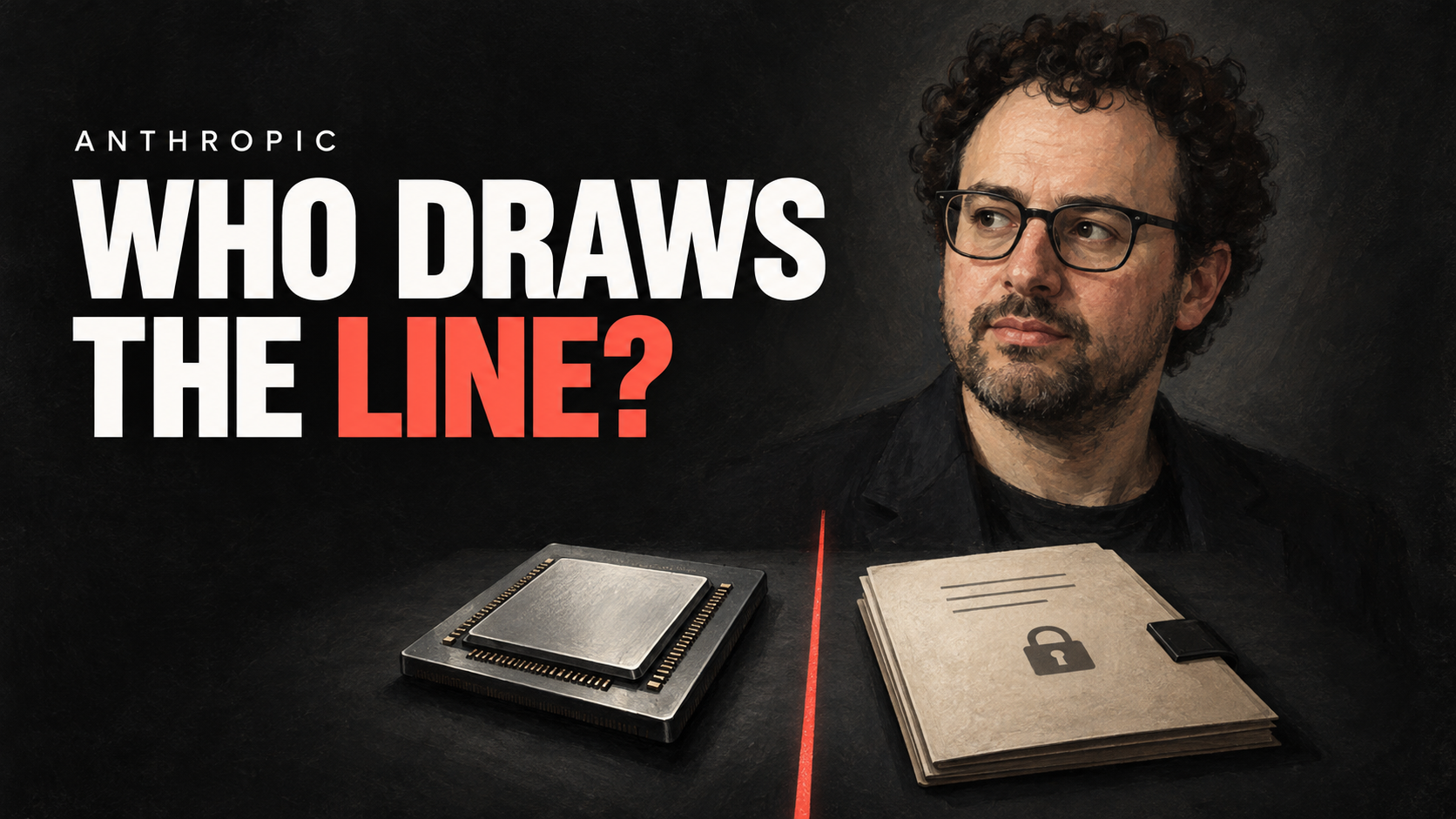
AI debates are not always about intelligence. Sometimes they are about who gets to set the boundaries of a system's use.
The February 2026 dispute
In a February 27, 2026 statement, Anthropic described a dispute with US defense leadership over requested limits concerning mass domestic surveillance and fully autonomous weapons. The company responded to a proposed supply-chain-risk designation and said it would challenge such a designation. This is Anthropic's account and position, not an independent finding or a final legal outcome. The company's statement
This article looks back at that statement. It does not claim to summarize every later development in the dispute.
My lens: capability is not permission
There are at least three different questions in any serious AI deployment:
- Can the system perform the task?
- Is the proposed use permitted by the relevant rules and contracts?
- Who remains accountable if something goes wrong?
I would keep those questions separate. A benchmark might help with the first. It cannot settle the other two.
Consider an illustrative enterprise procurement discussion. A vendor might permit document summaries but restrict another use. A customer needs to know whether the actual workflow fits those boundaries before building a critical service around it.
A planning worksheet I would use
- Define the intended use in plain language.
- Identify the person authorized to approve it.
- Record relevant contractual restrictions.
- Decide how to stop a workflow that crosses a boundary.
- Plan for a vendor or policy change without assuming unrestricted substitution.
That worksheet is an original governance suggestion, not a statement about the legal obligations of any participant in this dispute.
Why the story is bigger than one company
My takeaway is that product policy becomes real when it constrains a valuable or politically difficult use. The meaningful question is not only what a company says it believes, but how a deployment makes its boundaries understandable and enforceable.
For readers, the first step is careful attribution. Read a party's statement as a party's statement. A strong position can be newsworthy without every disputed claim becoming an established fact.