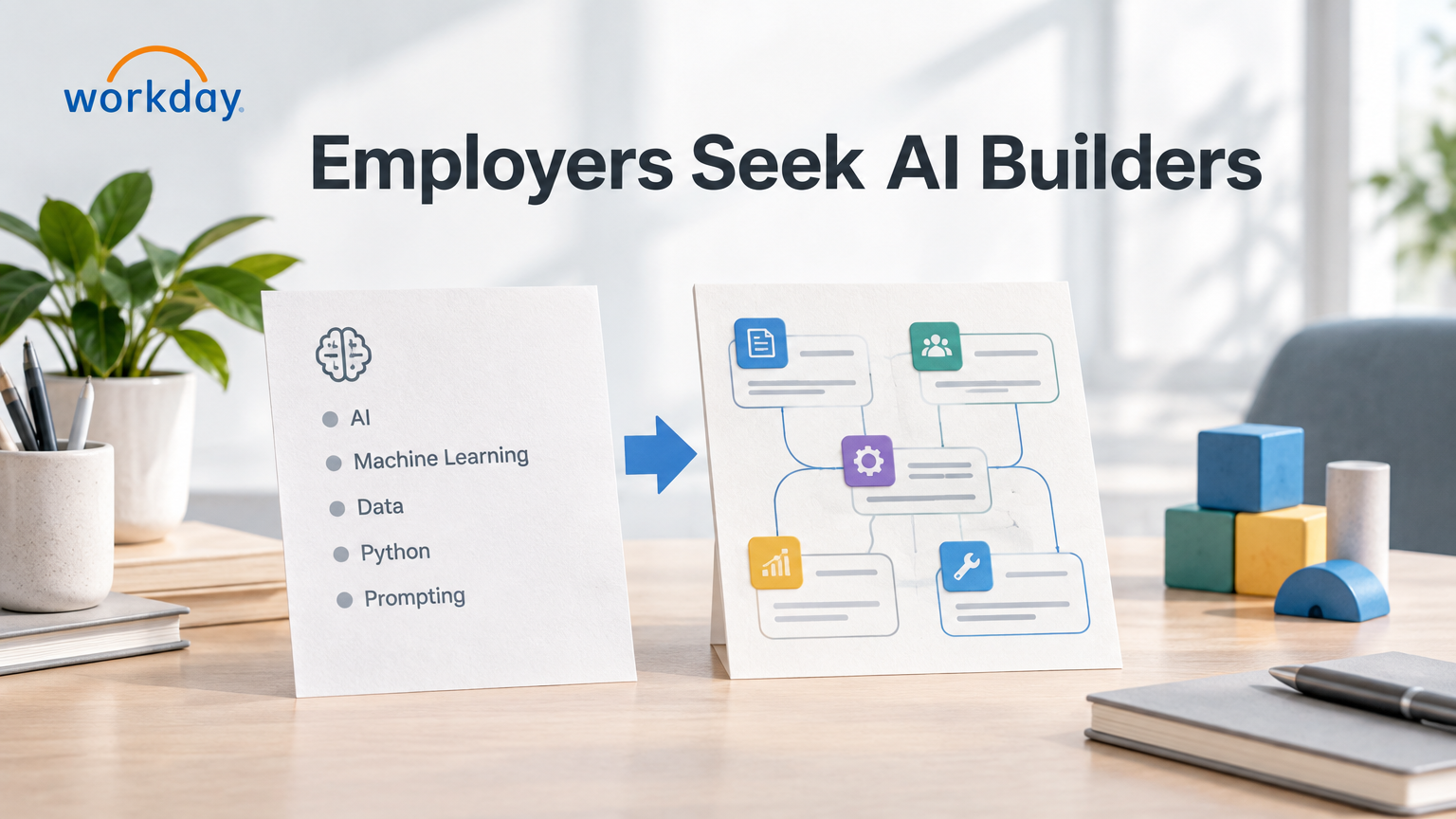
Employers using Workday’s recruiting platform appear to be changing how they describe AI skills in job openings. In its October 5 workforce report, the software company says demand for basic AI skills in job requisitions fell 25% after peaking in January 2026. At the same time, mentions of hands-on skills—including building AI tools, automating workflows and AI engineering—rose 51% from September 2025 through July 2026. (Workday)
The report’s practical message is less “learn one magic AI skill” than “some employers are asking for people who can put AI to work.” That could affect workers weighing what to learn and managers deciding how to develop staff. But it is a signal from one platform’s data, not a definitive forecast of what every employer will want.
What the figures do—and don’t—show
Workday analyzed requisitions from more than 550 employers using Workday Recruiting. The shifts describe changes in skill mentions in that group’s job postings; they do not establish that AI itself caused the changes, or that particular jobs will disappear. The report comes from a workforce-software vendor, and the available independent coverage does not provide a separate analysis of the underlying dataset or methodology. (Workday; Market Chameleon)
That distinction matters. A decline in postings that mention basic AI skills is not the same as proof that those skills are no longer useful. Nor does a rise in mentions of tool-building tell us how many jobs require those capabilities, how the roles are distributed, or whether workers are being hired into them. The figures track language in requisitions, not hiring outcomes.
The report also offers a glimpse of how employees and leaders view skill development. In a September 2026 survey of 6,000 full-time employees, 79% said they knew which skills they needed, while 66% said their employer helped them develop those skills. In a separate survey finding, 40% of business leaders expected AI to help them get more from existing employees, compared with 28% who expected it to reduce headcount. Those are reported opinions, not measured outcomes. (Workday)
For workers, the cautious takeaway is to look at the skills named in relevant openings rather than treating a broad AI-skills trend as a personal prescription. For employers, the employee survey points to a possible gap: many respondents said they knew what skills they needed, but fewer said their employer helped them develop them. The report does not show which training approaches work best.
The direction is worth watching, especially as employers revise job descriptions and expectations. Whether it represents a wider labor-market shift will require evidence beyond Workday’s participating customers.