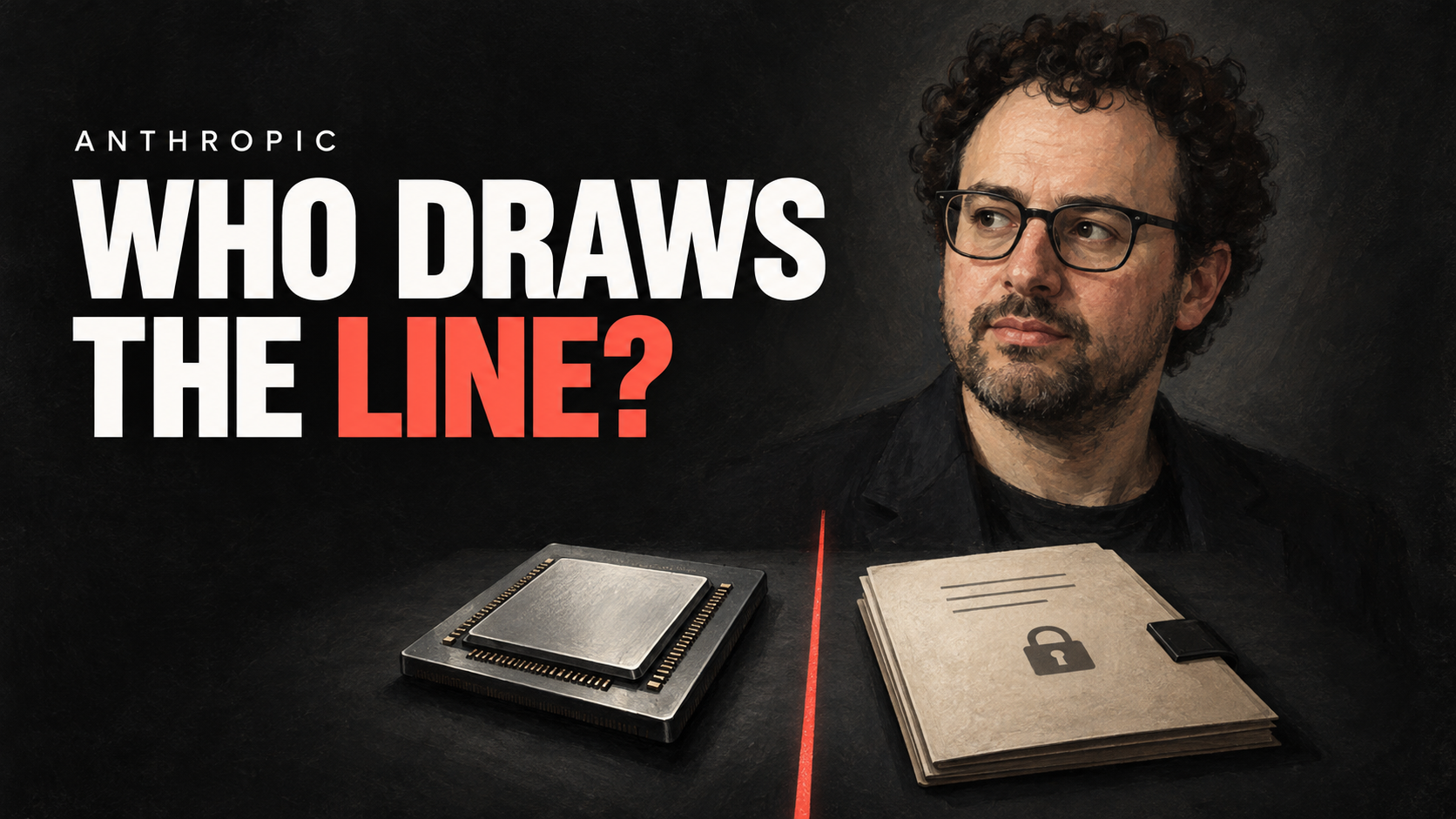
The AI conversation is not only "which model is faster?" Sometimes it is "are we moving faster than we can check what we are building?"
The proposal, in plain English
In September 2026, Anthropic CEO Dario Amodei argued for slowing frontier capability advances so safeguards could catch up. His proposal includes embedded outside evaluators, coordination among democratic countries, and wider international coordination. He distinguishes pacing from completely stopping training or technical progress. Amodei's essay
Axios reported that Sam Altman also supported the call for a slower pace.
Support for an idea is not, on its own, a signed and enforceable industry-wide pause. This retrospective uses September 12 as the reporting date; Amodei's page labels the essay September 2026. His risk scenarios are his assessment, not proven predictions of what will happen.
My reading: what would the extra time buy?
I think the most useful question is not simply "slow down or speed up?" It is what someone would verify before the next consequential step.
A hypothetical agent that drafts a message is one thing. An agent authorized to send it to customers is another. Before expanding that authority, I would want tests for unintended recipients, misleading content, sensitive data, and recovery after a mistake.
That small example is not equivalent to frontier-AI risk. It illustrates a familiar principle: a more powerful action needs a stronger basis for trusting it.
Questions worth asking about a commitment
- What specific behavior or capability triggers another review?
- Who can inspect the evidence independently?
- Can a reviewer report a negative finding?
- What actually changes if a test fails?
- How would outsiders distinguish progress from a polished announcement?
These are my evaluation questions, not a claim that a completed global agreement already answers them.
A calmer way to follow the debate
My preference is to separate the proposal, the public response, and the implemented action. They are three different stories. A dramatic headline can compress them into one, but a useful explainer should put the distinctions back.
The takeaway is not that all AI progress has stopped. It is that the pace of progress, the quality of checks, and the credibility of commitments deserve attention alongside the next product launch.