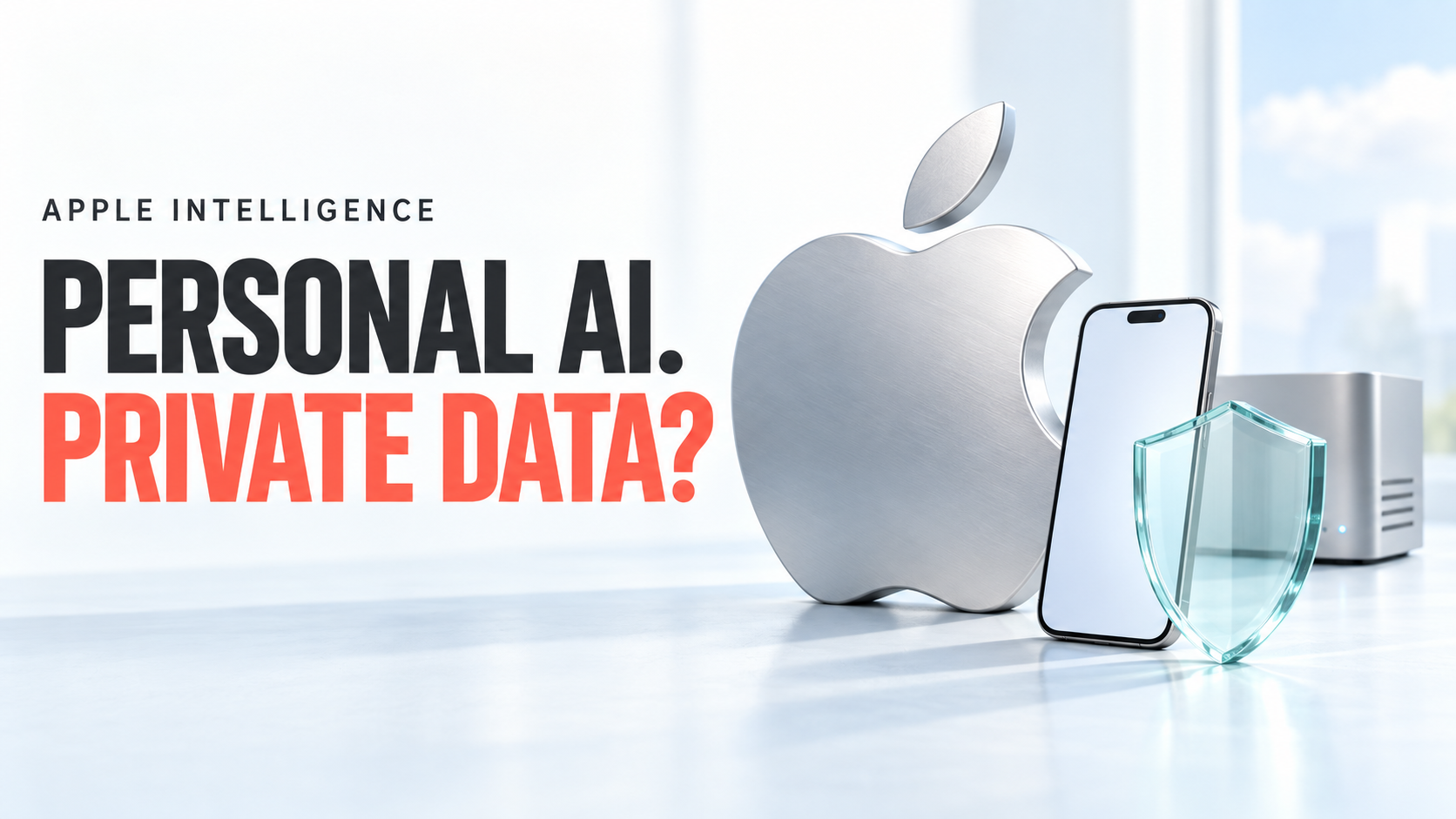
Your phone can be smart without knowing everything about you. The interesting part of personal AI is deciding where that boundary belongs.
The 2024 announcement
On June 10, 2024, Apple introduced Apple Intelligence for iPhone, iPad, and Mac. Apple described a combination of on-device processing, personal context, and Private Cloud Compute for more demanding requests. Those privacy assurances are Apple's claims, not an independent audit in this article. Apple's announcement
This is a look back at that announcement, not a compatibility guide for today's devices or a hands-on review.
My take: helpful does not have to mean unlimited
The question I would ask of any personal assistant is simple: what information did it need to do this one thing?
Consider an illustrative email feature. Rewriting a selected paragraph needs that paragraph and a tone preference. It does not automatically need your entire inbox, calendar, contacts, and location history. More context might improve an answer, but it also makes the permission decision more important.
I would prefer a product that makes this decision visible at the moment it matters, rather than burying every possible permission in a long first-run screen.
A useful mental checklist
- What text or files will leave the device?
- Which service receives the request?
- Can I cancel before sending?
- Can I finish the task without granting broader access?
- Is there a clear way to undo the result?
These are questions to ask, not claims that every Apple feature has exactly this behavior.
The product lesson
For a small team building an AI app, I would start with a narrow task and a clear preview. Make the useful thing work before asking for the whole digital life around it. A visible confirmation can be a better product decision than another impressive animation.
Personal AI is most convincing to me when it feels helpful and understandable at the same time. The ambition is not just a smarter assistant. It is an assistant whose boundaries people can actually explain.