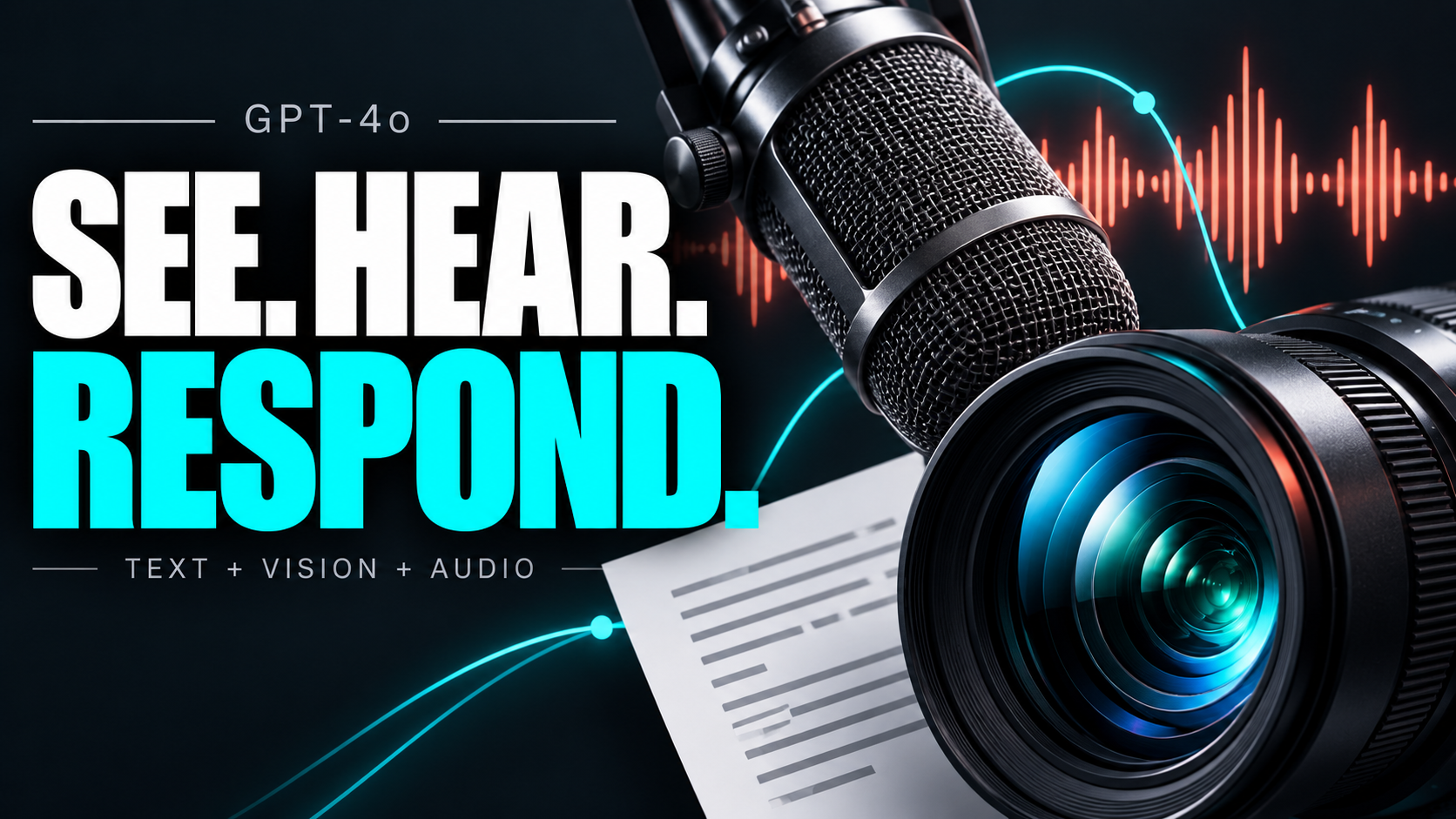
GPT-4o's 2024 launch made one idea easier to imagine: interacting with AI through whatever input fits the moment, instead of translating everything into a text prompt first.
The launch, without the hype
OpenAI introduced GPT-4o on May 13, 2024. The announcement described a model designed around text, vision, and audio, and demonstrated more natural real-time interaction. Initial access and rollout were staged; the demonstration was not a guarantee that every audio feature was immediately available through every API or ChatGPT plan. OpenAI's launch post is the primary source for those details.
What multimodal actually means
In plain English, a multimodal system can work with more than one kind of information. A screenshot can show something that takes a long paragraph to describe. Audio can carry a spoken request without a keyboard.
For an illustrative support workflow, a user might share a screenshot of an error and ask a question aloud. The product can bring those inputs together. The useful outcome is less friction, not a model pretending to be a person.
The product questions that remain
What should the app collect? A microphone or camera is not a neutral input box. Request permission clearly, show when capture is active, and avoid collecting more than the task needs.
What should the model be allowed to infer? Reading visible interface text is different from making sensitive assumptions about a person. Keep the task specific.
What happens when it is wrong? A spoken response can sound convincing even when the underlying interpretation is shaky. Offer a text summary, explicit confirmation for important actions, and an easy correction path.
The lasting takeaway
My interpretation is that multimodal AI changed the interaction design conversation. It did not remove the engineering work around permissions, latency, storage, or reliability.
Build around a concrete user task. A good multimodal experience helps someone finish that task with less effort while keeping control over their information. That is more useful than adding voice and vision because they look impressive in a demo.