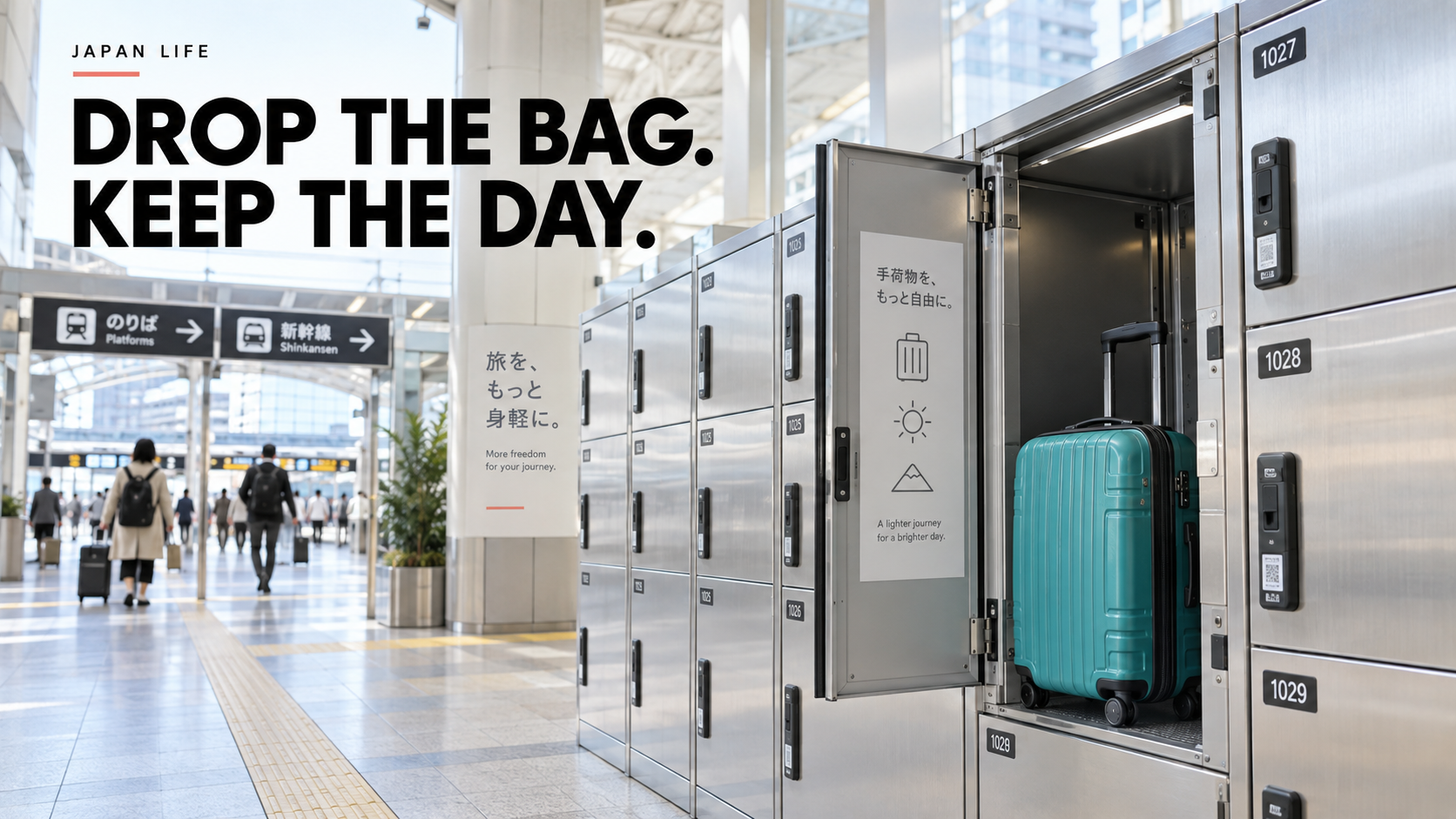
Your hotel check-in is hours away. Your suitcase is not.
That small timing mismatch can turn a relaxed day into a long walk with one hand permanently attached to a bag. A station locker can help, but the smartest locker is not necessarily the first empty one you see. It is the one you can find again, access when you need it, and fit into your actual route.
Here is a simple system for a hands-free afternoon without a stressful evening retrieval mission.
Start with the return journey
Before searching for a locker, answer one question: where will I need my bag next?
If you are returning to the same station, storage there may make sense. If your day ends across the city, leaving the suitcase at the departure station might create an unnecessary detour. Asking your accommodation whether it accepts bags before check-in is another option, not an entitlement. Confirm with that property first.
Think of the locker as one stop in an itinerary, not a magical pause button for luggage. Write down the next fixed commitment: check-in, a reserved train, or meeting someone. Work backward from that, leaving time to reach the locker, retrieve the bag, and navigate the station with it.
For example, imagine arriving at a station, spending the afternoon nearby, then taking a train to your hotel. A locker close to your later departure route could be more useful than one beside the exit you used on arrival. This is a planning example, not a claim that any particular station has a suitable locker.
Search for a location, not just an empty door
JR East's station-information FAQ points readers toward station maps for locker locations. The operator's locker-information document also notes that locations and sizes can change, including during construction.
Use the current map as your starting point. Then confirm what is physically there. Large stations can have several locker banks, and a familiar station name does not identify a particular corridor.
A useful location note contains three things:
- The station and nearest named exit or landmark.
- Whether the lockers are inside or outside ticket gates.
- The locker bank and your individual locker number.
Do not rely on a zoomed-in photo of a number alone. Twenty doors with the same finish can look remarkably similar when you are tired. A wider picture of the surroundings helps you reconstruct the route.
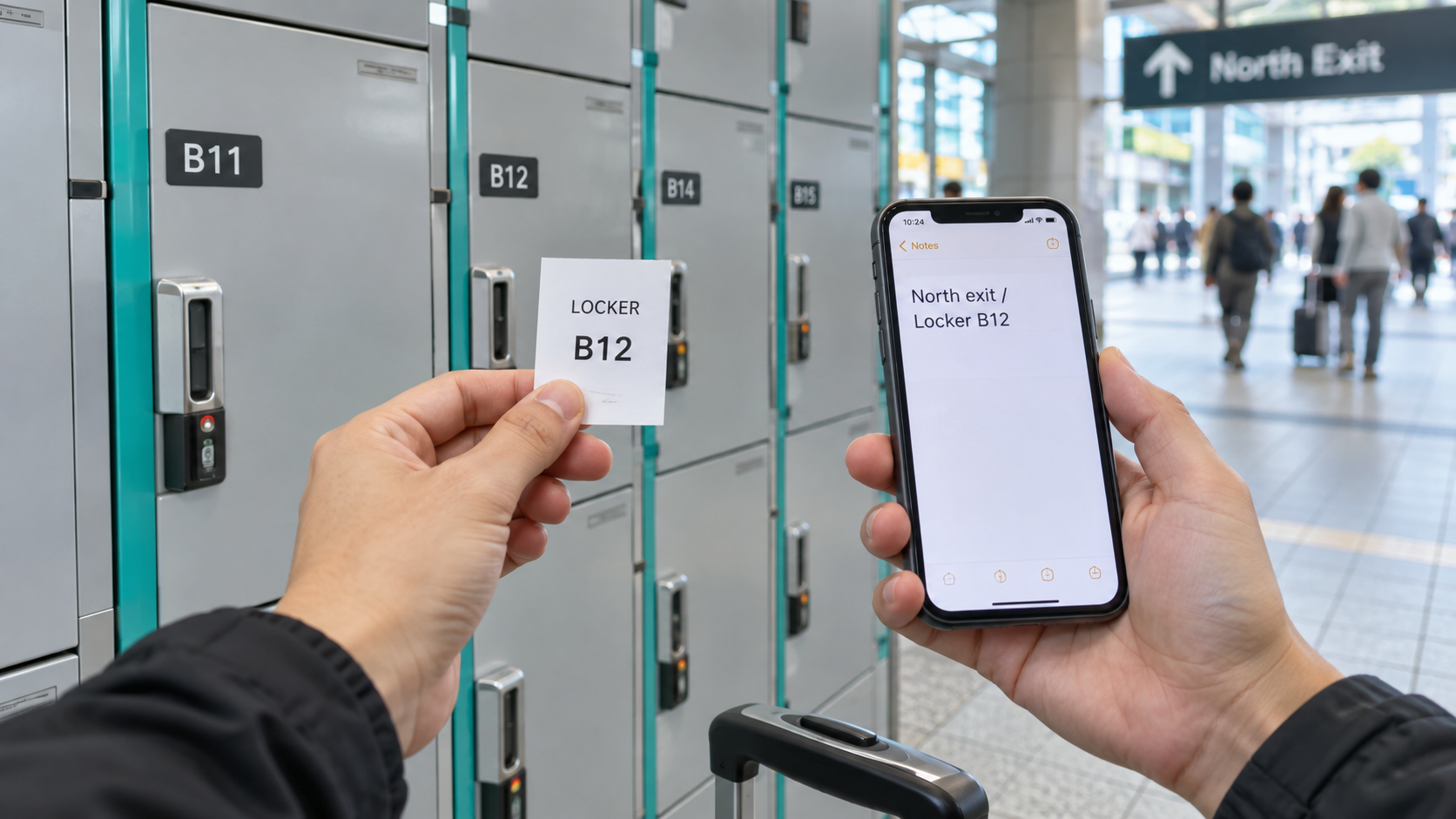
Planning example: save the location as well as the access details. This is not an operator's actual receipt or screen.
Check four things before paying
First, check fit. Measure mentally against the full suitcase, including wheels and handles. Do not force the door closed or assume that a size label guarantees room for every bag.
Second, check access hours. A station locker is not automatically reachable around the clock. A door may sit behind a gate or in an area that closes. Read the information at that locker bank and check the operator's current guidance.
Third, check payment and access method. Some lockers use coins, some electronic payment, and some a service-specific process. JR East's Welcome Suica guide describes compatible lockers where the card is also the key, and advises retaining the receipt with the location and contact details. That does not mean every locker in Japan works this way.
Finally, check the charging period and storage limit on the machine. Avoid building a budget around a price from an old travel post. A change of day or an extended stay can matter; the displayed terms are what you need for this transaction.
If one of these points is unclear, resolve it before putting the bag inside. A two-minute question now is less disruptive than an evening support call.
Keep the key with you, not in the suitcase
The access method belongs in your day bag. That includes a physical key, the payment card used as a key, or the receipt and service details required by that locker.
Keep essential medicine, travel documents, valuables, and anything you will need during the afternoon with you. Check the operator's prohibited-items rules rather than treating the locker as a place for absolutely anything.
For a shared trip, agree who holds the access item and who is responsible for pickup. Sending another person a location photo does not necessarily give them the ability to open the locker. The access process still matters.
You can keep a private backup note, but do not post access codes or receipts publicly. A travel story does not need to include the thing that opens your luggage.
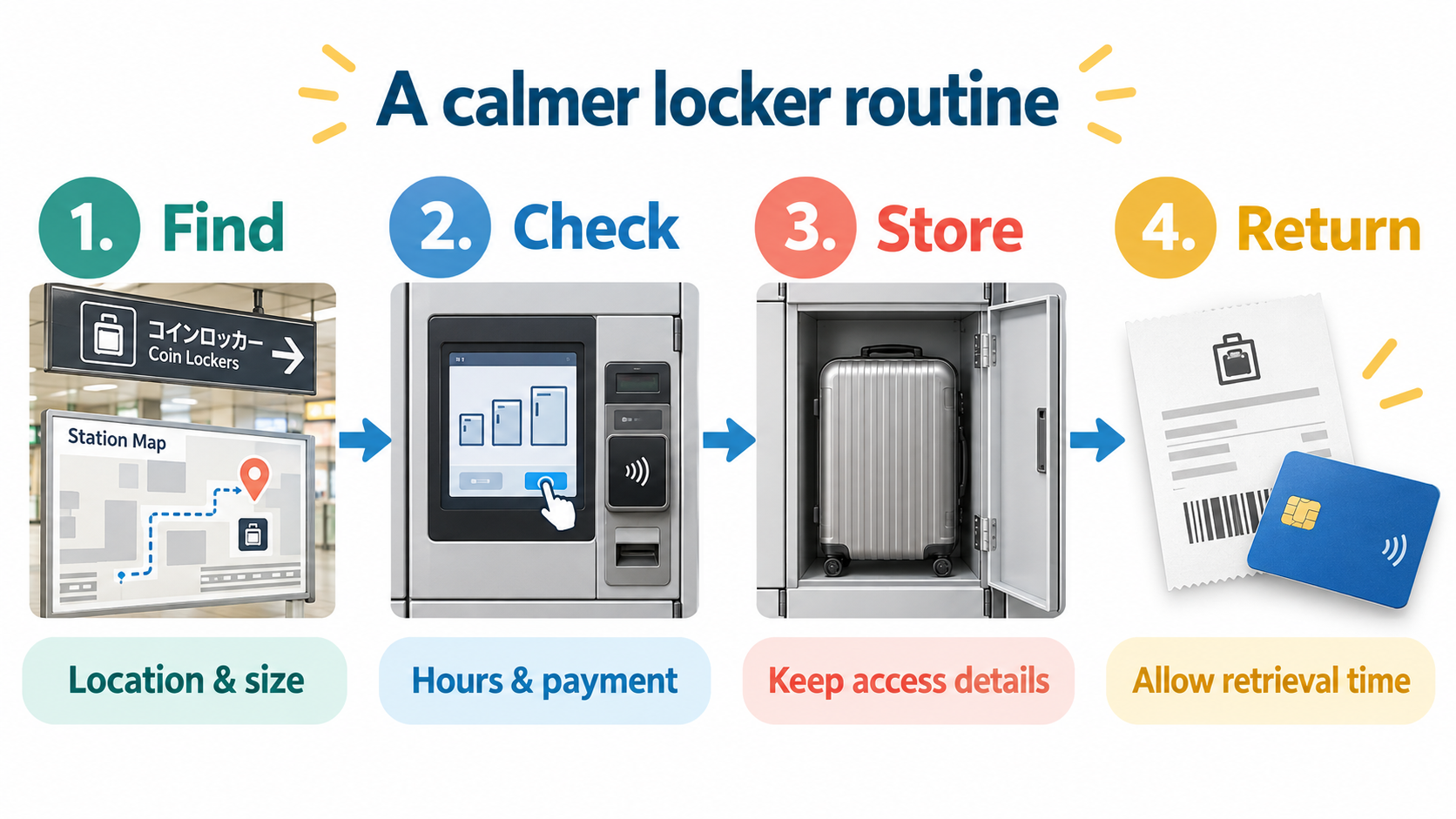
A reusable routine, not a substitute for the instructions on your chosen locker.
What if everything is full?
Set a limit on how long you will search. Walking between locker banks can quietly eat the same afternoon you were trying to protect.
JR East Smart Logistics' Multi-Ecube service offers functions such as locker search and reservation for its own network. It can be worth checking when that network matches your route. Availability, fees, registration, and supported services belong to the specific operator; they are not universal station features.
A sensible fallback sequence is: check another nearby bank, investigate a relevant official storage service, or contact your accommodation. Compare the full detour rather than only the storage price. Carrying the suitcase directly to your destination may be the simpler answer.
The last five minutes before you walk away
Make sure the door is securely locked. Put the access item somewhere deliberate. Save a location photo and a note about the retrieval deadline. Check that you have the essentials you intended to keep.
Then stop thinking about the suitcase and enjoy the afternoon.
The real life hack is not knowing that lockers exist. It is spending a little attention at drop-off so you do not have to spend a lot of attention at pickup.
Sources
- JR East: Station locker locations (checked 2026-10-05)
- JR East: Locker location and size information (checked 2026-10-05)
- JR East: Welcome Suica locker use (checked 2026-10-05)
- JR East Smart Logistics: Multi-Ecube (checked 2026-10-05)