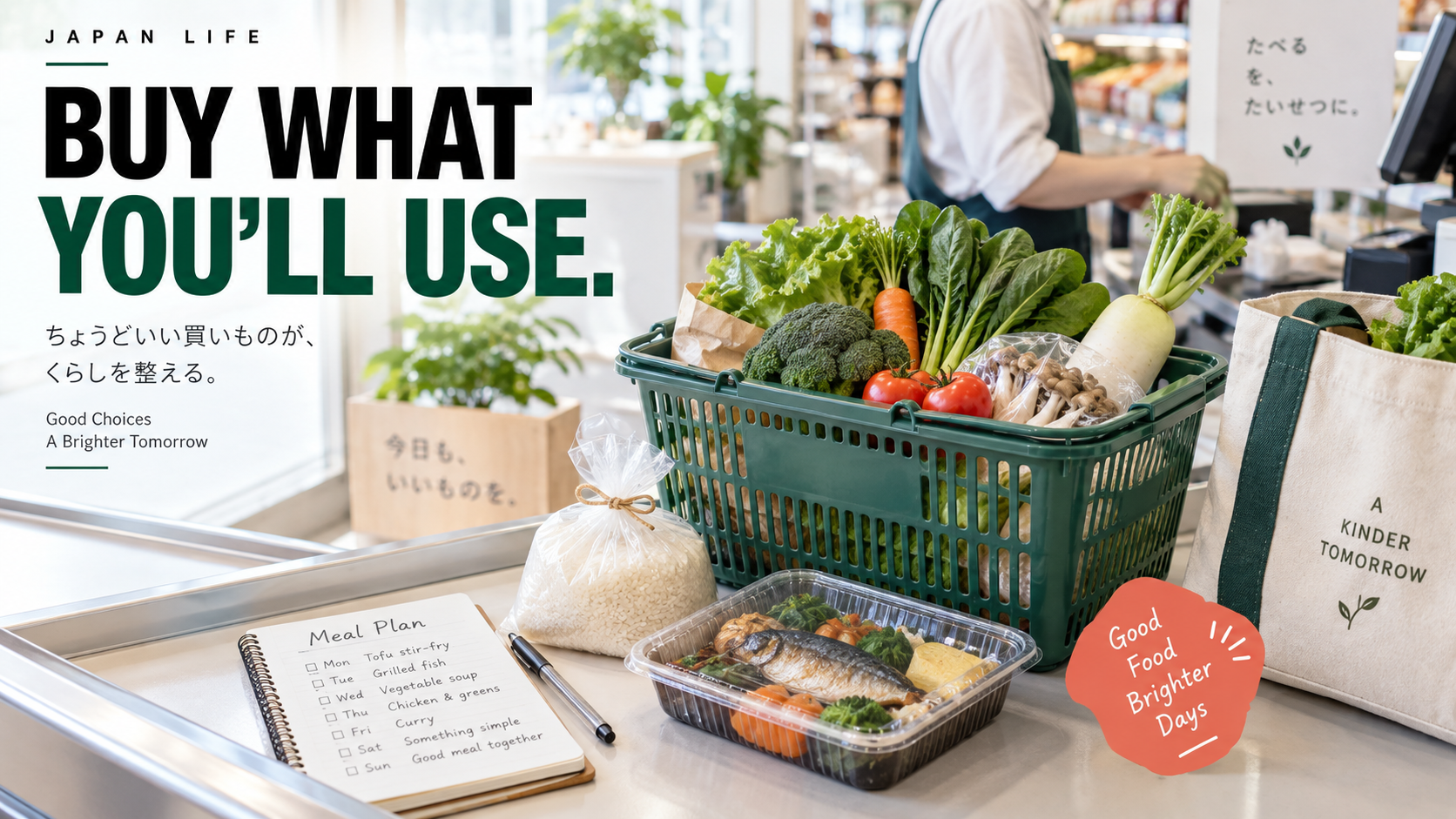
The supermarket discount sticker is tempting. The forgotten food at the back of your fridge is less exciting.
Shopping well in Japan is not only about finding a cheap bento. It is about matching the label, the storage requirement, and the moment you will actually eat something. Once those three line up, a small grocery trip can feel much simpler.
Start with this rule: buy for the week you are having, not the week you wish you were having.
Learn the two date labels first
Two useful words are 消費期限, commonly explained as use-by, and 賞味期限, commonly explained as best-before. The Consumer Affairs Agency's official date-label explanation distinguishes a safety-related limit for more perishable foods from a quality-related date for products that keep longer. Both depend on the specified storage method.
This is not permission to ignore dates. Follow use-by dates. A best-before label is a different kind of information, not a universal promise that a particular product is safe after that date. Opening a package, damaged packaging, or improper storage changes the question.
The agency's date-label information page is a better reference than trying to infer safety from a discount sticker or appearance alone.
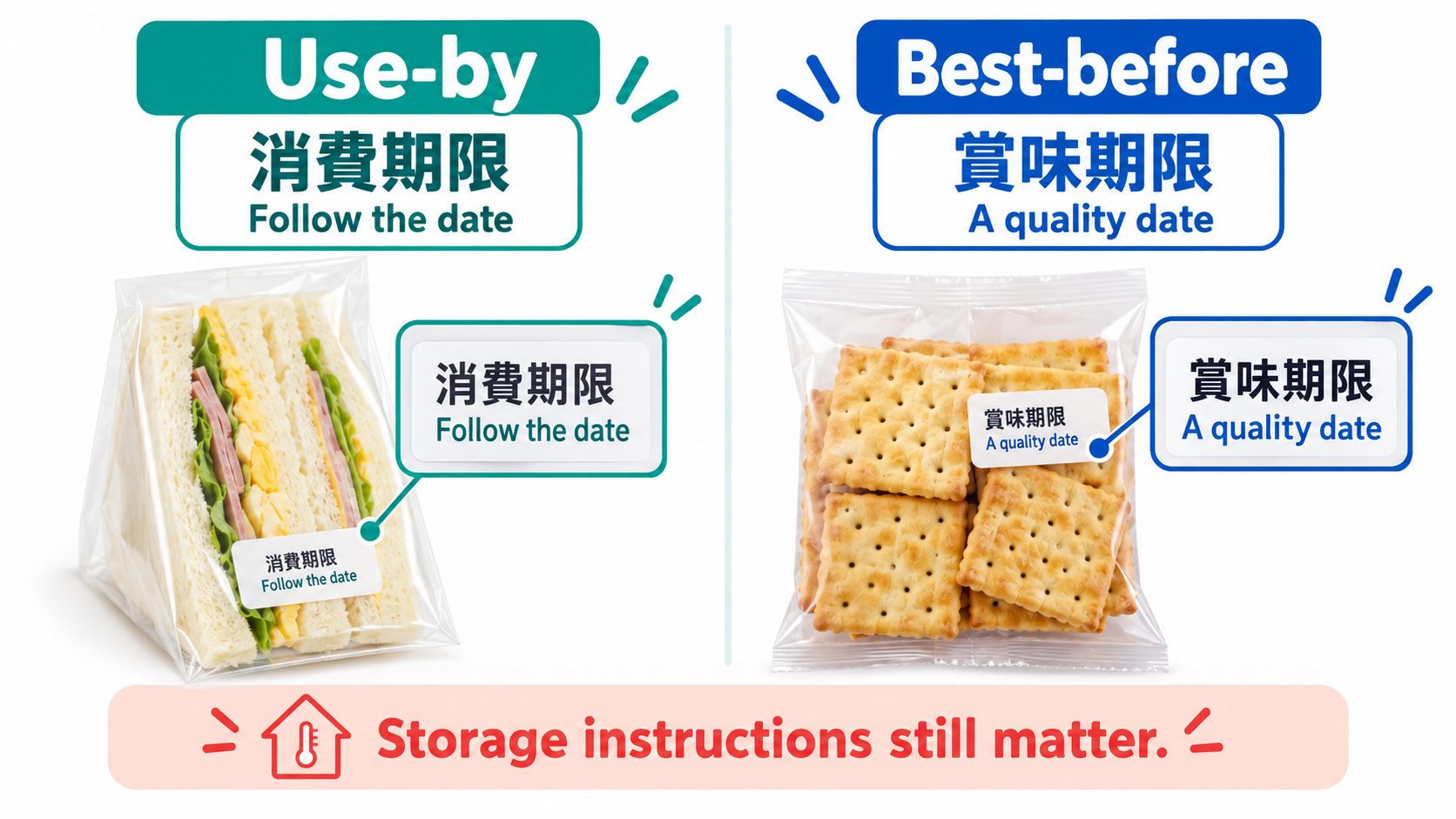
Fictional packages make the label distinction easier to see; use the instructions on the food you actually buy.
Build your basket backward from one meal
Instead of starting with every shelf, start with tonight. What are you going to eat, how much time do you have, and what is already at home?
Here is an illustrative decision. You have rice and a few vegetables, but you will arrive home late. Buying one complementary item might fit better than buying ingredients for three elaborate dishes. On another day, when you have time to cook, a small set of ingredients for a shared meal could be the more useful purchase.
Neither basket is morally superior. The better one is the one you will use.
Write a short list with three columns: already have, need for a meal, and optional. You can keep it in a phone note. The optional column is where new snacks and attractive seasonal things belong, rather than letting them silently replace dinner.
If you live with someone else, check who is shopping and which meals are shared. Two thoughtful shoppers can still buy twice the same ingredients when neither knows what the other has planned.
A five-minute check before leaving home
Look inside the fridge and cupboard. You are not doing a full inventory; you are finding the items that should shape the next trip.
The Consumer Affairs Agency's food-loss guide for home meals encourages checking what you have before buying and choosing food in a way that reduces waste. If you will use an item soon, automatically reaching for the furthest date is not always necessary.
Translate that into a small personal routine:
- Notice what you already intended to use.
- Pick one or two realistic meals.
- Buy the missing parts, not an entirely new plan.
You can also take a private fridge photo before leaving. It is useful when the aisle has erased your memory of whether you still have eggs. Keep the photo for yourself; there is no reason to publish the inside of your home to solve a shopping question.
The discount-sticker test
A reduced price only helps if the food fits your plan. Before putting it in the basket, ask:
- Will I use it within the relevant date and instructions?
- Can I get it home and store it appropriately?
- Does it replace something I needed, or add something I was not going to buy?
- Is the quantity right for my household?
There is no reliable nationwide hour when every supermarket marks everything down. Store routines, stock, and product categories differ. If you want to understand a particular store, observe that store without assuming a social-media tip applies everywhere.
Avoid turning the trip into a hunt for a sticker. A modest planned basket can be a better use of your money and attention than several discounted items with no meal attached.
Read storage instructions as part of the price
The date is only one part of the label. The Consumer Affairs Agency's English food-labeling overview explains the Japanese labeling framework. For your own purchase, find the product's storage directions and any relevant ingredients or allergen information.
If the language is unfamiliar, translation can help you locate a section, but do not treat an uncertain machine translation as a reliable answer to an allergy or food-safety question. Ask the retailer or manufacturer when the distinction matters.
Think about the route home too. A long chain of errands may not fit a purchase that needs prompt suitable storage. Put the grocery trip at the right point in your day, rather than assuming every bag of food can accompany you anywhere.
This is a planning choice, not a reason to memorize a generic temperature chart from a blog. The product's instructions and authoritative food-safety guidance are the references for the actual item.
Give the food a visible next step
When you get home, store it as directed and make the next meal easy to remember. A short note can say what you intend to use first, without turning the fridge into an elaborate productivity project.
Avoid hiding the newest purchase behind the oldest one and then forgetting both. Organize your space in a way that lets you see the plan. Do not cover the label or separate food from important instructions just to make the shelf look cleaner.
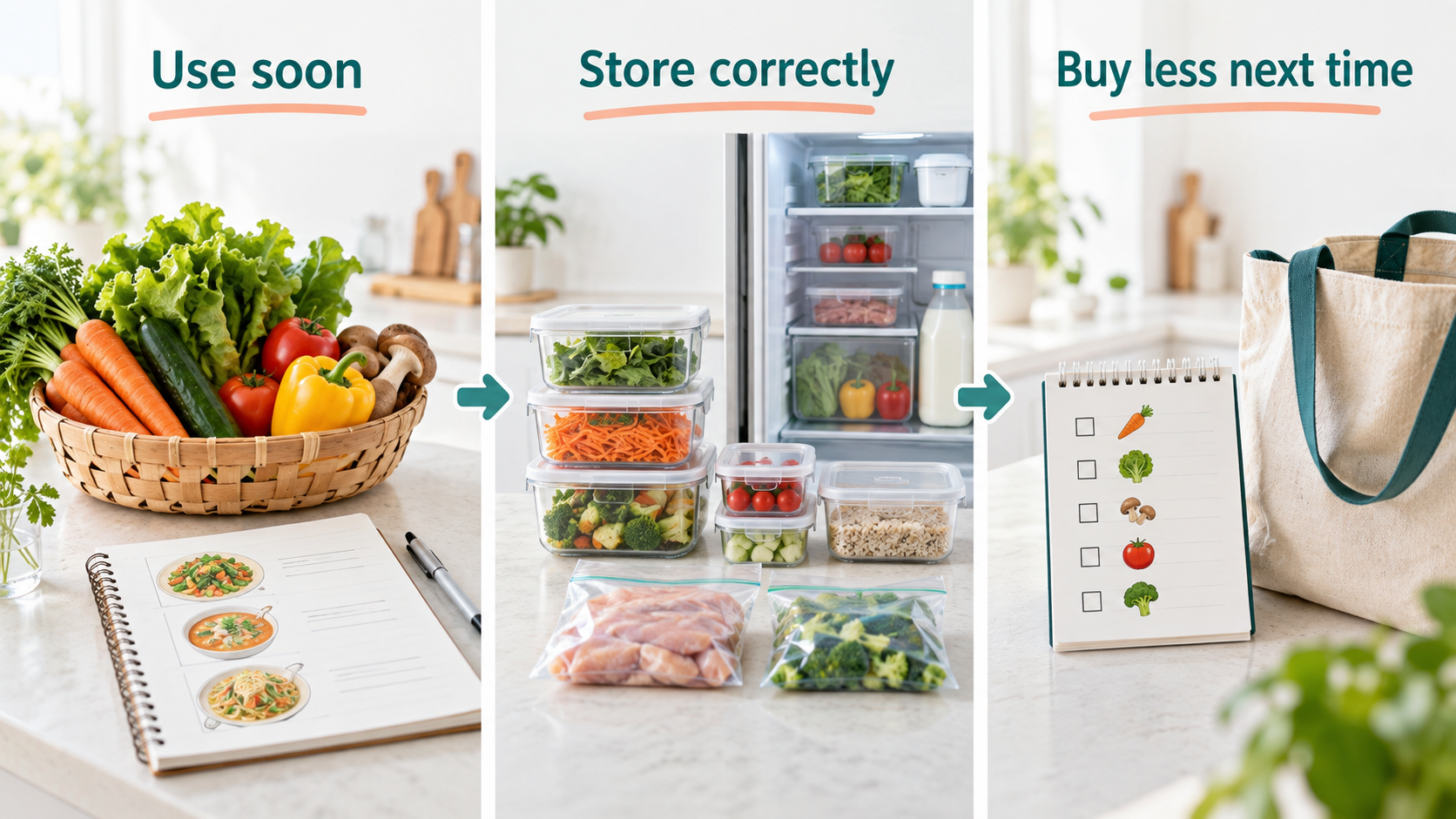
The practical loop: plan a use, store as instructed, and adjust the next basket.
A week of small adjustments beats a perfect spreadsheet
Try one simple review after a few shopping trips. What did you use happily? What sat untouched? What did you buy again even though you already had it?
Suppose you keep buying a large pack because its unit price looks attractive, but half of it never fits your meals. A smaller pack may be the more useful purchase for your particular routine. That is a household observation to make, not a guarantee that small packs are always cheaper.
The same idea applies to ambitious ingredients. If a recipe requires several things you rarely use, consider whether you really want that recipe this week. Save it for a day when you have the time and a plan for what remains.
Keep the review kind. A changed work schedule or an unexpected dinner invitation does not mean you failed at groceries. It means the next basket should respond to new information.
Your next trip, in one sentence
Before entering the store, finish this sentence: I am buying these things for these meals.
You can still leave room for something interesting. The point is to make the basics intentional, so a snack is a choice rather than dinner's accidental replacement.
The satisfying part of a smart grocery trip is not the receipt. It is opening the fridge later and knowing what to do next.
Sources
- Consumer Affairs Agency: Date-label definitions (checked 2026-10-05)
- Consumer Affairs Agency: Date-label information (checked 2026-10-05)
- Consumer Affairs Agency: Reducing food loss at home (checked 2026-10-05)
- Consumer Affairs Agency: Food-labeling overview (checked 2026-10-05)