You have a route on your phone, a train arriving, and one small problem: everyone seems to know exactly where to tap except you.
The useful Japan transport hack is not memorizing every station. It is separating three decisions: how you pay, which train you board, and whether that train needs another ticket. Once those stop being one giant question, the journey becomes easier to manage.
Practical guide checked October 5, 2026. This is not a new fare announcement. Availability, device compatibility, and service rules can change.
Start with the card, not a stack of apps
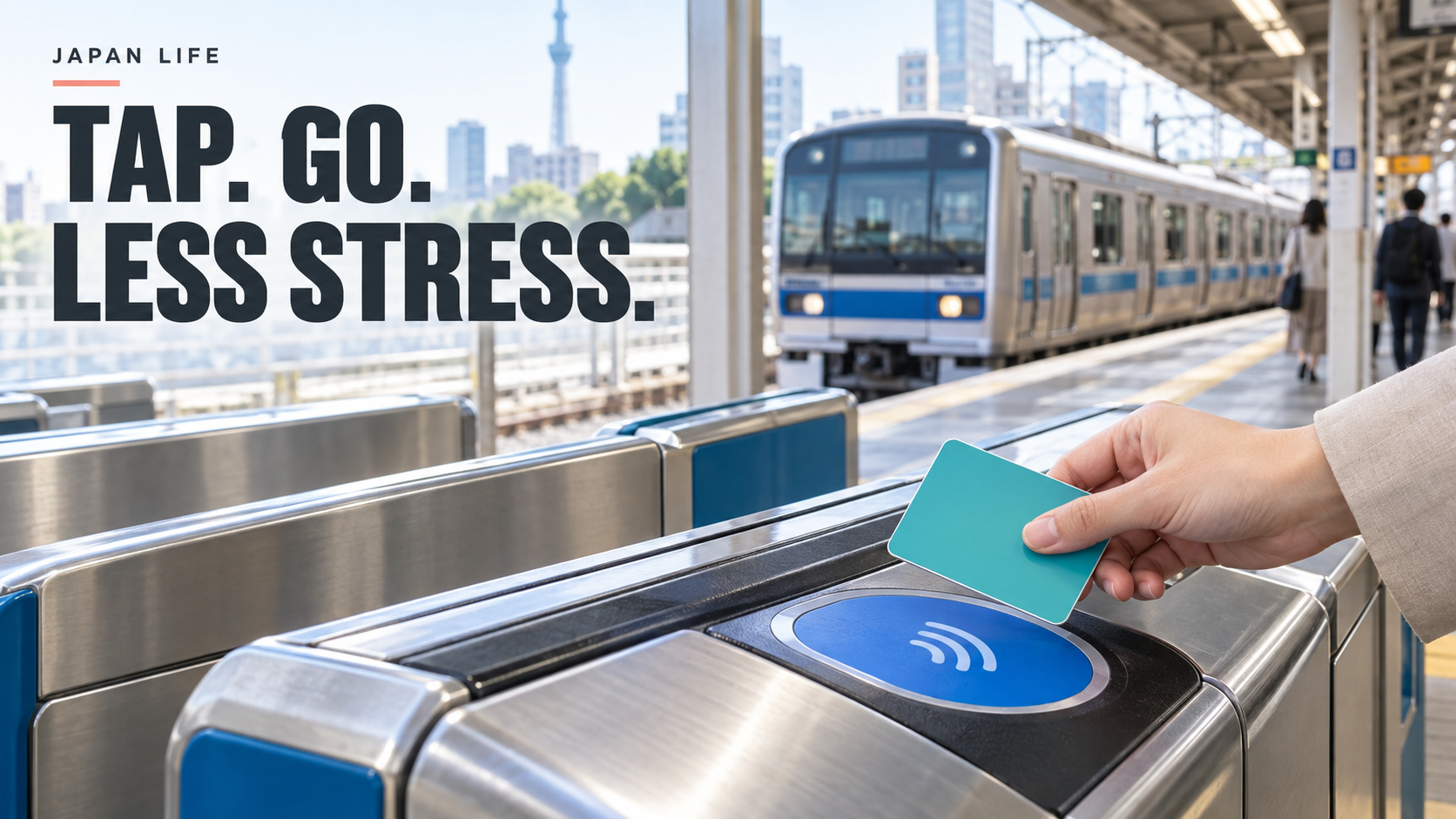
An IC card is a prepaid payment tool, not an unlimited travel pass. JR East describes Welcome Suica as usable for participating trains, buses, and shops. Its standard short-stay physical card lasts 28 days from purchase. Coverage is broad but not universal: look for the relevant IC acceptance mark. JR East: Welcome Suica
For a visitor, that distinction is worth more than a list of supposedly secret discounts. Tapping can remove the repeated ticket-buying step. It does not automatically make the journey cheaper, cover every operator, or pay for every seat type.
Think of it like a wallet dedicated to travel. You still need to understand what you are buying.
If you are staying longer, compare the operator's regular card or mobile options rather than assuming a visitor product is the right everyday choice. Check the official requirements before buying. A familiar name is not enough to tell you the expiry, refund conditions, or recovery options of a particular product.
Physical or mobile? Choose your failure mode
Welcome Suica Mobile is an iOS app that can issue and top up Suica; JR East documents topping up through a card registered with Apple Pay. Check its supported devices and current setup instructions. That is not a promise that every phone or every foreign bank card will work. JR East: Welcome Suica Mobile
Choose the version you can use comfortably when you are tired, offline, or carrying bags. If you prefer a physical card, keep it in one accessible pocket. If you use a phone, practice finding the payment interface before the station entrance and plan how you will keep the device charged.
Do not switch between a physical card and a phone halfway through one journey just because they both say Suica. Treat the medium you used to enter as the one you should present when leaving; ask station staff if something goes wrong rather than improvising at several gates.
The goal is a repeatable routine, not the most impressive setup.
The one check to make before tapping
Read the route result for the train type, not just the destination. JR East says limited express, express, and Green Car journeys require the related tickets in addition to the ordinary Welcome Suica arrangement. Separate ticketless services have their own conditions. Do not assume a normal contactless tap covers a reserved seat or a Shinkansen journey. JR East's ticket caveats
Here is an illustrative decision process:
- A route says an ordinary local train: check IC coverage and your balance.
- A route says limited express or a special seat: open that operator's ticket instructions before boarding.
- A route crosses distant regions: check whether the trip can actually be completed with your payment method.
- Something is unclear: show the full route to station staff, including the train name and destination.
This is a planning example, not a ticket-validity guarantee for a particular route. The operator's current instructions take priority.
A nationwide card is not a nationwide through-ticket
JR East warns that Welcome Suica cannot be used for a continuous journey spanning separate IC areas. Its example is travel between the Tokyo metropolitan area and Sendai. Buying the appropriate ticket for the longer journey is a different task from using the same card for local rides in each city. JR East: areas covered and restrictions
That explains a surprisingly common misunderstanding: a card working in two places does not mean it can pay for every journey connecting them.
Before a regional trip, write down the operator, departure station, arrival station, and train category. Check those details together. A short route screenshot without the train type is not enough to settle the question.
Build a station routine that survives a busy morning
Before joining the gate queue, have the card or phone ready. Leave enough space to stop safely if the gate rejects it. If there is a problem, move aside and ask staff; repeated tapping is not a useful diagnosis.
Save two things on your phone: the destination written clearly and the name of the station exit or meeting point. This is an organizational suggestion, not a claim that every station has the same layout. A correct train followed by an unclear meeting point can still become an annoying detour.
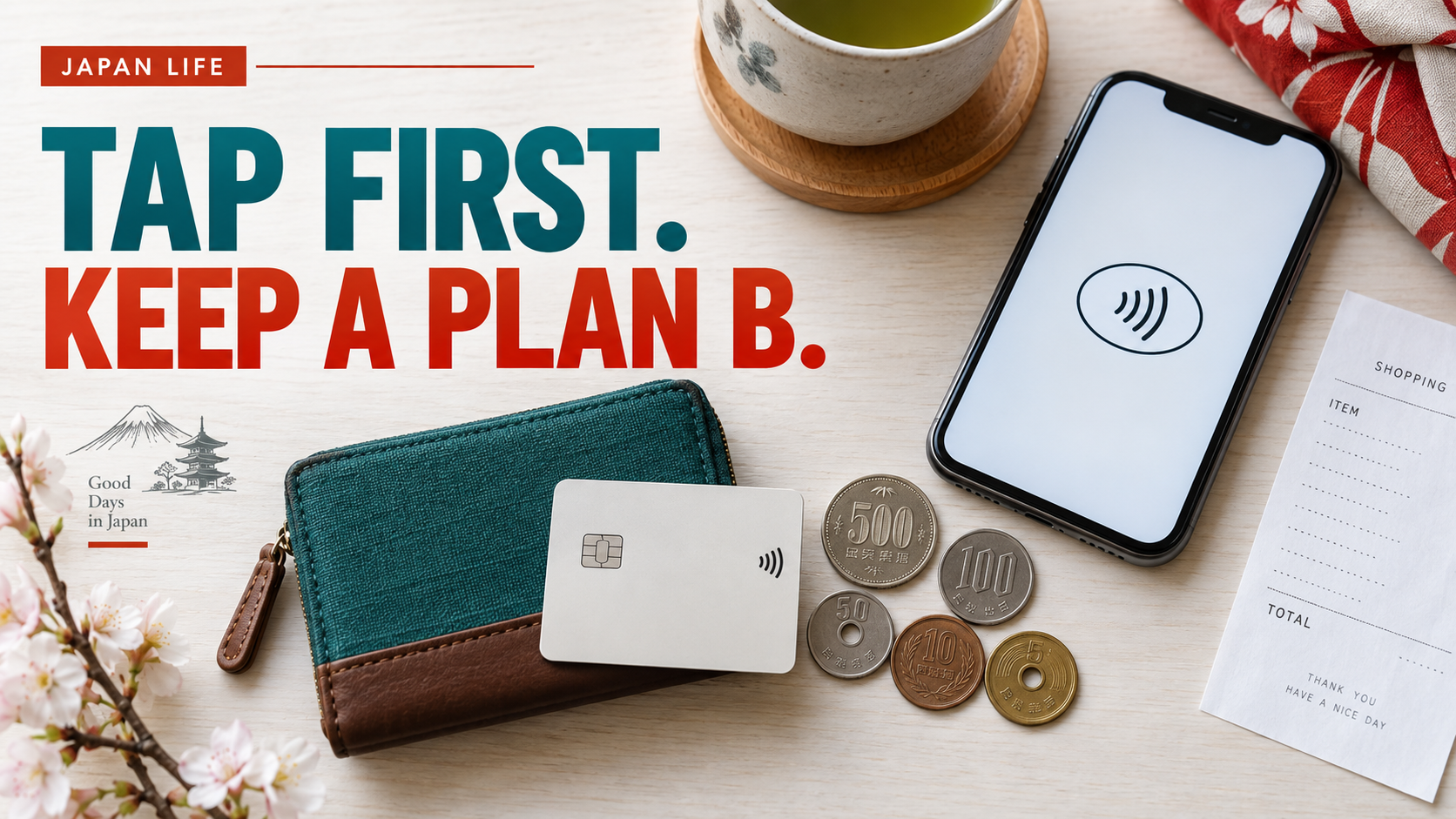
Also keep a small backup payment option rather than relying on one app for the entire day. The purpose is resilience. You do not need a complicated collection of cards, five transport apps, and a spreadsheet for a local commute.
Does a day pass beat tapping?
Sometimes the right comparison is convenience versus a pass, not one IC card versus another. Make an illustrative list of the journeys you actually expect to take, then compare the operator's current individual fares with the pass's price, covered lines, and exclusions.
Do not count imaginary extra rides to make a pass look like a bargain. If you would spend the afternoon walking anyway, that matters. If a pass covers one network but your plan uses another, that matters too. The cheapest-looking headline price is not the same as the cheapest usable itinerary.
For an ordinary day with uncertain plans, simplicity can be valuable. For a carefully planned route, a specific pass may be worth checking. There is no universal winner.
The takeaway to save
One payment method. One route check. One ticket check.
Before leaving, confirm your balance or top-up plan, the train category, and whether an extra ticket is required. Keep the destination easy to show someone. That is less exciting than a viral travel trick, but considerably more useful when the next train is already arriving.
Sources
- JR East: Welcome Suica (checked 2026-10-05)
- JR East: Welcome Suica Mobile (checked 2026-10-05)